



我们的研发管线专注于自身免疫性疾病和癌症等重大疾病领域,拥有广阔的市场前景和显著的竞争优势。通过持续推动多个创新靶点的研究,我们已在核心管线P001中取得了重要突破,成功筛选出多个在体外和体内实验中表现卓越的分子,并确定了针对不同适应症的临床前候选分子(PCC)。
我们的研发管线专注于自身免疫性疾病和癌症等重大疾病领域,拥有广阔的市场前景和显著的竞争优势。通过持续推动多个创新靶点的研究,我们已在核心管线P001中取得了重要突破,成功筛选出多个在体外和体内实验中表现卓越的分子,并确定了针对不同适应症的临床前候选分子(PCC)。尤为值得一提的是,我们的管线中包含1个潜在的first-in-class分子和1个潜在的best-in-class分子,彰显了我们在创新药物研发领域的领先实力与前瞻性布局。我们致力于为全球患者提供突破性疗法,推动医疗健康的进步。


PAM-194
Potential indications:AD, HS, IBD, PSO, PN, PPP.
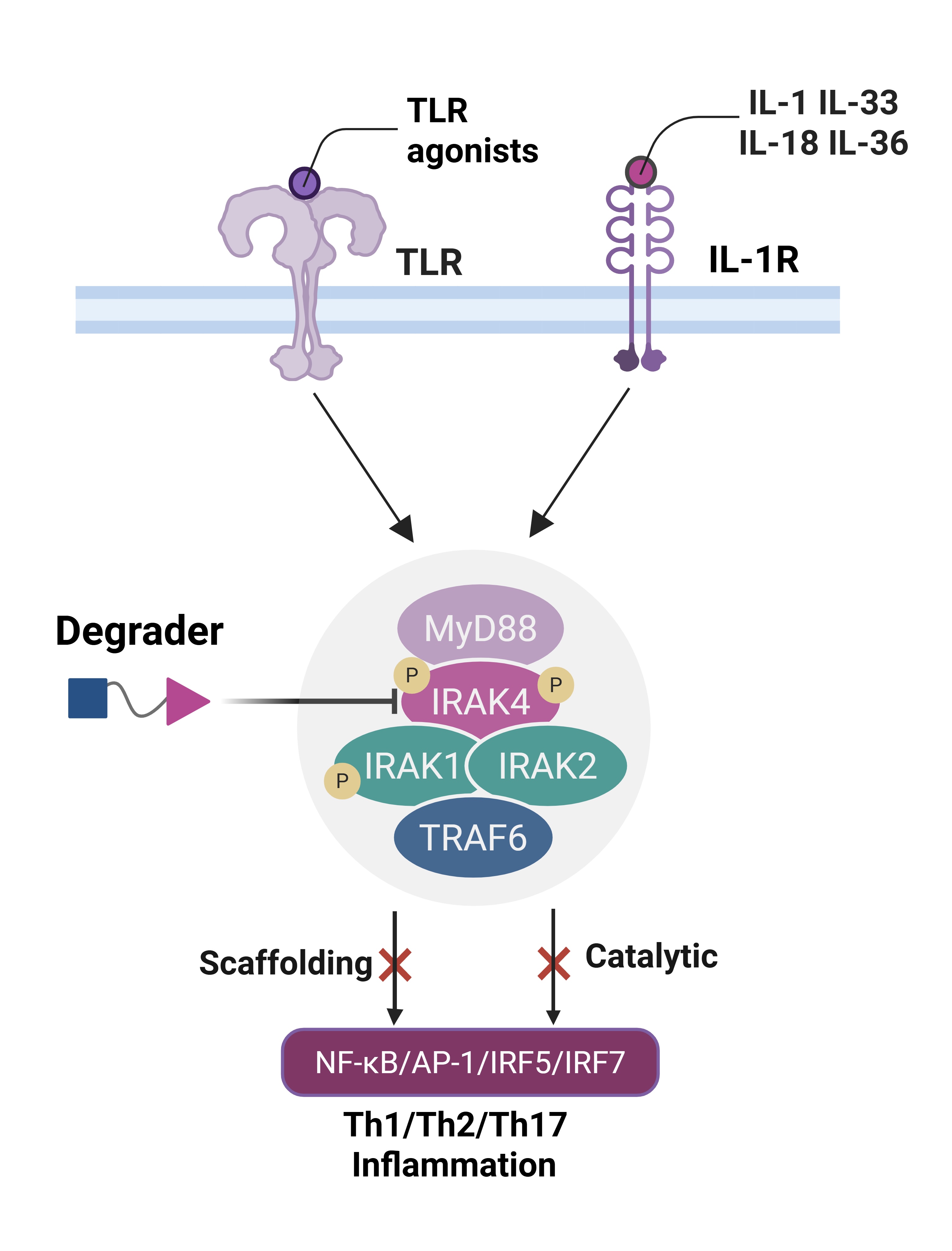
Interleukin-1 receptor-associated kinase 4 (IRAK4), a pivotal regulator of the innate immune response and a central component of the myddosome signaling complex, serves as a critical mediator of interleukin-1 (IL-1) and Toll-like receptor (TLR) signaling cascades. Functioning as a scaffolding kinase, IRAK4 acts as a molecular bridge between the innate and adaptive immune systems, integrating signaling through its dual enzymatic and scaffolding activities. Complete degradation of IRAK4 abrogates both its kinase and scaffolding functions, thereby eliciting a broad spectrum of anti-inflammatory effects with favorable tolerability profiles. This mechanism represents an innovative therapeutic strategy for the treatment of immune-inflammatory disorders. Emerging clinical evidence demonstrates that IRAK4-degrading agents effectively recapitulate the biological activities of upstream biologic therapies. Target indications encompass a diverse range of diseases, including hidradenitis suppurativa (HS), atopic dermatitis (AD), psoriasis, inflammatory bowel disease (IBD), asthma, rheumatoid arthritis (RA), systemic lupus erythematosus (SLE), multiple sclerosis (MS), and others, in which dysregulated TLR/IL-1 signaling pathways contribute to disease pathogenesis.
PAM-5129
Potential indications:SLE, IBD, RA, AD, HS, COPD, LN, Sepsis, DKD.
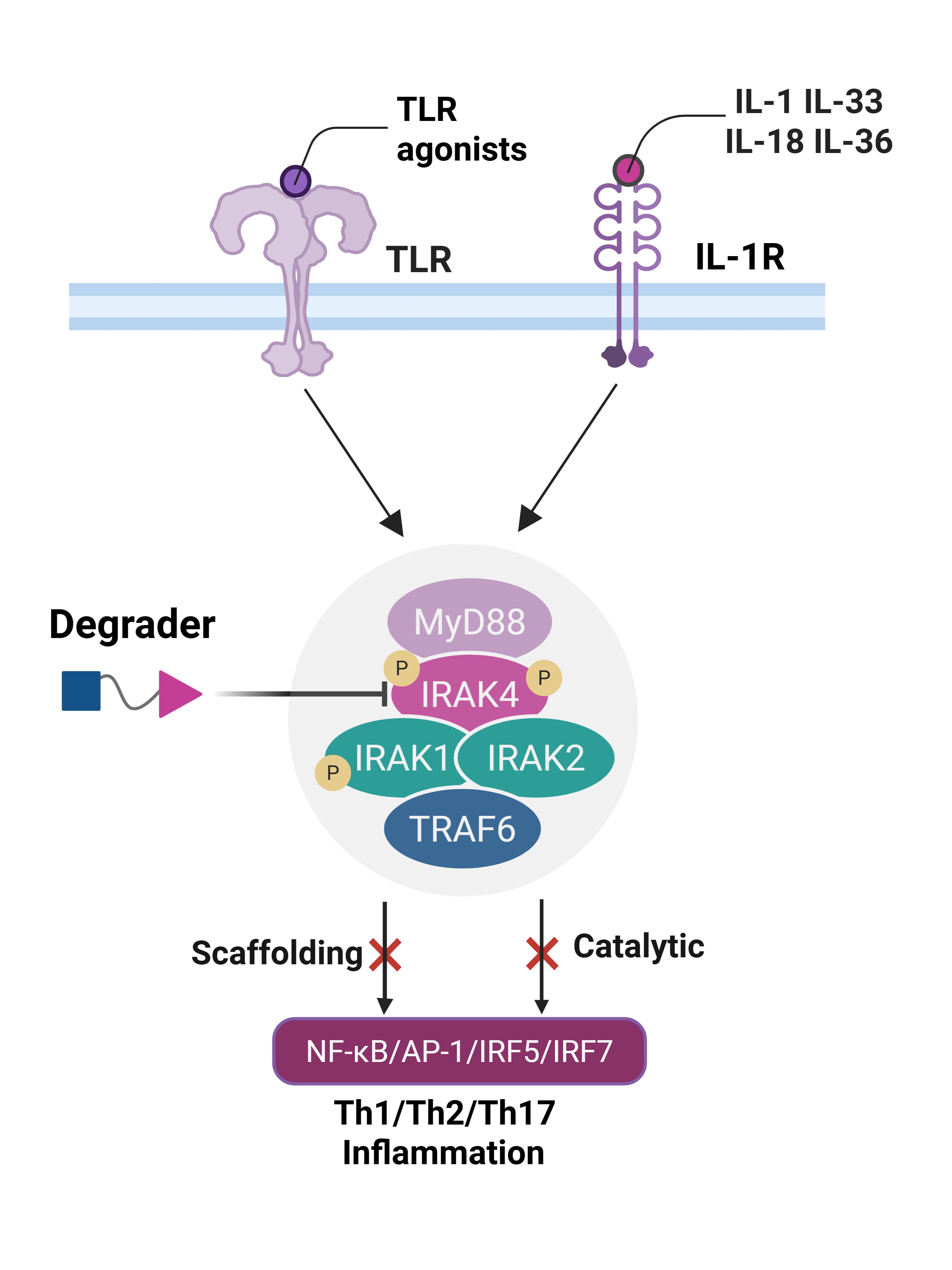
Interleukin-1 receptor-associated kinase 4 (IRAK4), a pivotal regulator of the innate immune response and a central component of the myddosome signaling complex, serves as a critical mediator of interleukin-1 (IL-1) and Toll-like receptor (TLR) signaling cascades. Functioning as a scaffolding kinase, IRAK4 acts as a molecular bridge between the innate and adaptive immune systems, integrating signaling through its dual enzymatic and scaffolding activities. Complete degradation of IRAK4 abrogates both its kinase and scaffolding functions, thereby eliciting a broad spectrum of anti-inflammatory effects with favorable tolerability profiles. This mechanism represents an innovative therapeutic strategy for the treatment of immune-inflammatory disorders. Emerging clinical evidence demonstrates that IRAK4-degrading agents effectively recapitulate the biological activities of upstream biologic therapies. Target indications encompass a diverse range of diseases, including hidradenitis suppurativa (HS), atopic dermatitis (AD), psoriasis, inflammatory bowel disease (IBD), asthma, rheumatoid arthritis (RA), systemic lupus erythematosus (SLE), multiple sclerosis (MS), and others, in which dysregulated TLR/IL-1 signaling pathways contribute to disease pathogenesis.

PAM-194
Potential indications:AD, HS, IBD, PSO, PN, PPP.
Interleukin-1 receptor-associated kinase 4 (IRAK4), a pivotal regulator of the innate immune response and a central component of the myddosome signaling complex, serves as a critical mediator of interleukin-1 (IL-1) and Toll-like receptor (TLR) signaling cascades. Functioning as a scaffolding kinase, IRAK4 acts as a molecular bridge between the innate and adaptive immune systems, integrating signaling through its dual enzymatic and scaffolding activities. Complete degradation of IRAK4 abrogates both its kinase and scaffolding functions, thereby eliciting a broad spectrum of anti-inflammatory effects with favorable tolerability profiles. This mechanism represents an innovative therapeutic strategy for the treatment of immune-inflammatory disorders. Emerging clinical evidence demonstrates that IRAK4-degrading agents effectively recapitulate the biological activities of upstream biologic therapies. Target indications encompass a diverse range of diseases, including hidradenitis suppurativa (HS), atopic dermatitis (AD), psoriasis, inflammatory bowel disease (IBD), asthma, rheumatoid arthritis (RA), systemic lupus erythematosus (SLE), multiple sclerosis (MS), and others, in which dysregulated TLR/IL-1 signaling pathways contribute to disease pathogenesis.
PAM-5129
Potential indications:SLE, IBD, RA, AD, HS, COPD, LN, Sepsis, DKD.
Interleukin-1 receptor-associated kinase 4 (IRAK4), a pivotal regulator of the innate immune response and a central component of the myddosome signaling complex, serves as a critical mediator of interleukin-1 (IL-1) and Toll-like receptor (TLR) signaling cascades. Functioning as a scaffolding kinase, IRAK4 acts as a molecular bridge between the innate and adaptive immune systems, integrating signaling through its dual enzymatic and scaffolding activities. Complete degradation of IRAK4 abrogates both its kinase and scaffolding functions, thereby eliciting a broad spectrum of anti-inflammatory effects with favorable tolerability profiles. This mechanism represents an innovative therapeutic strategy for the treatment of immune-inflammatory disorders. Emerging clinical evidence demonstrates that IRAK4-degrading agents effectively recapitulate the biological activities of upstream biologic therapies. Target indications encompass a diverse range of diseases, including hidradenitis suppurativa (HS), atopic dermatitis (AD), psoriasis, inflammatory bowel disease (IBD), asthma, rheumatoid arthritis (RA), systemic lupus erythematosus (SLE), multiple sclerosis (MS), and others, in which dysregulated TLR/IL-1 signaling pathways contribute to disease pathogenesis.